
Solar Battery Storage Explained: Is a Home Battery Worth It?
Solar battery storage keeps surplus electricity from your panels for use in the evening, instead of exporting it cheaply to the grid. A battery is most worth it when you are out during the day, use a lot of power after dark, or can charge it on a cheap overnight tariff. Typical home batteries hold 5 to 15kWh.
Sam Ward Electrical, NAPIT registered (membership 63406). Last reviewed:
At a glance
- What it does
- Stores surplus solar or cheap off-peak electricity for later
- Typical size
- 5 to 15kWh for most homes
- Best for
- Homes that use most power in the evening, or on time-of-use tariffs
- Paperwork
- Electrical Installation Certificate and network operator notification
- Power cuts
- Only gives backup power if the system includes a backup function
How does solar battery storage work?
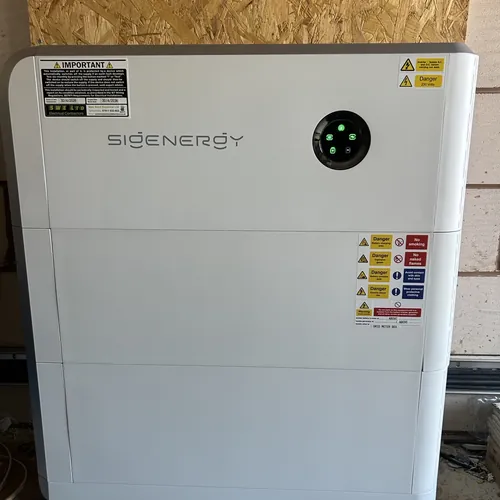
Solar battery storage works by charging a battery with electricity your panels generate but you do not use at the time. In the evening the battery discharges to power your home, so you buy less from the grid. Smart batteries can also charge from the grid overnight on a cheaper tariff and discharge at peak times.
What size battery do I need?
The right battery size is usually the amount of electricity you use between sunset and bedtime, plus any overnight use you want to cover. For many homes that is 5 to 10kWh. A larger battery only helps if your panels can fill it on most days, so the size should match both your usage and your solar system.
What is the difference between AC-coupled and DC-coupled batteries?
An AC-coupled battery has its own inverter and is the easiest to add to existing solar panels. A DC-coupled battery shares a hybrid inverter with the panels and is often chosen for new systems.
| AC-coupled | DC-coupled (hybrid) | |
|---|---|---|
| Best for | Adding a battery to existing panels | New solar and battery systems |
| Inverter | Battery has its own inverter | One hybrid inverter for panels and battery |
| Existing panels | Existing inverter stays in place | Existing inverter is usually replaced |
Is a battery worth it without solar panels?
A battery can be worth it without solar panels if you are on a time-of-use tariff with a large gap between night and day prices. The battery charges overnight at the lower rate and powers the house during the day and evening. The savings depend entirely on your tariff and usage, so look at your bills before deciding.
Can I still be paid for exported electricity?
Yes. The Smart Export Guarantee requires larger energy suppliers to offer a tariff for electricity you export. With a battery you export less but use more of your own power, which is usually worth more than the export rate. Suppliers normally ask for an MCS certificate before they pay.
Does a battery keep the lights on in a power cut?
Only if the system has a backup or emergency power function. Many batteries shut down with the grid for safety unless they are installed with a backup circuit or a whole-home changeover. If backup power matters to you, say so at the design stage, because it changes the equipment and wiring.
Where can a home battery be installed?
Home batteries are usually installed in a garage, utility room or outbuilding, following the manufacturer's instructions on temperature and ventilation. Current guidance (PAS 63100) advises against bedrooms, escape routes and lofts, so the location is something we check carefully during the survey for solar battery storage.
Sources and further reading
- Smart Export Guarantee (Ofgem)
- Solar panels advice (Energy Saving Trust)
- Microgeneration Certification Scheme (MCS)